EYFS Playground Markings: Supporting Early Years Development
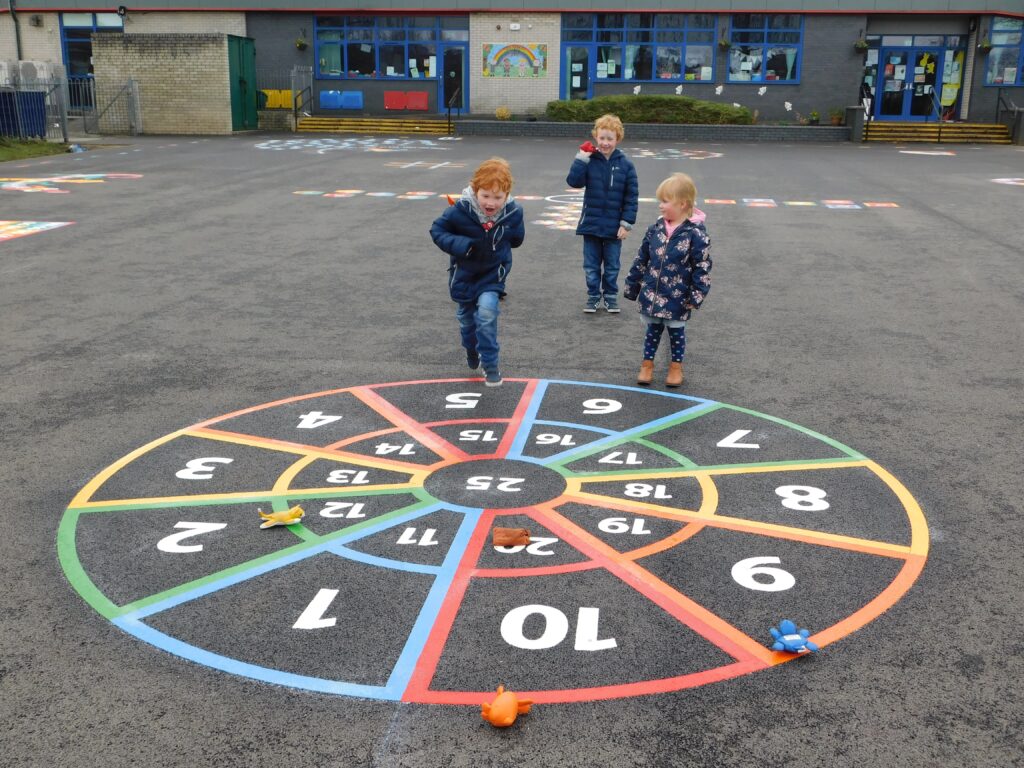
EYFS playground markings are thermoplastic playground designs, such as phonics trails, number snakes, roadways, mazes and hopscotch, made for children in the Early Years Foundation Stage so that nurseries, pre-schools and reception classes can support the EYFS areas of learning through outdoor play. They give young children a reason to talk, move, count, take turns and imagine every time they go outside.
We work with pre-schools, nurseries, day care settings and reception classes across the UK, designing every early years marking in-house. This guide explains which designs suit early years, how they link to the EYFS framework and how to plan a playground that supports each child's development.
Which EYFS playground markings work best for nurseries and reception classes?
The EYFS playground markings that work best for nurseries and reception classes are simple, colourful designs that children can use with little adult help: phonics and alphabet trails, number snakes and grids, shapes, clocks, roadways, mazes, hopscotch and other traditional games, plus trails and mile tracks for running.
Our most popular early years designs include:
- Phonics and alphabet markings to develop early language and letter sounds.
- Maths markings such as number snakes, counting grids, number grids and shapes for early numeracy.
- Clock markings for a first introduction to time.
- Roadways for direction, road safety and role play.
- Mazes that children can work through on their own.
- Traditional games such as hopscotch for social play and taking turns.
- Mile tracks and trails to build regular exercise into the day.
- Wellbeing markings that help children talk about their emotions and feelings.
- Themed markings such as space, treasure hunts, animals and nature.
- Branded markings with your setting's logo and values.
You can see a ready-made selection in our EYFS playground markings package, or browse our wider range of educational playground markings, including phonics designs. Because we design everything from scratch, any of these can be adapted or replaced with a bespoke design that suits your setting's ethos and goals.
How do EYFS playground markings support the prime and specific areas of learning?
EYFS playground markings support the EYFS framework by giving children an outdoor space to practise each area of learning through play, from the three prime areas of communication and language, physical development and personal, social and emotional development to the specific areas such as literacy and mathematics.
The Early Years Foundation Stage covers children from birth to age 5 and is built around learning through play, which is why the playground matters so much in early years settings. The table below shows how markings link to each area.
| EYFS area of learning | How playground markings help | Example markings |
|---|---|---|
| Communication and language | Role play and group games give children reasons to talk, listen and explain their ideas, building vocabulary. | Roadways and mini towns, phonics games |
| Physical development | Running, hopping, jumping, throwing and catching build gross motor skills, balance and coordination. | Trails, mile tracks, hopscotch, targets |
| Personal, social and emotional development | Shared games teach turn-taking, sharing and resolving disputes, while wellbeing designs help children name their feelings. | Traditional games, wellbeing markings |
| Literacy | Children hop, skip or dance along letters, linking sounds to movement. | Phonics and alphabet trails |
| Mathematics | Counting, number recognition, shape and pattern become part of a game. | Number snakes, counting grids, shapes, clocks |
| Understanding the world | Children explore direction, road safety and nature through play. | Roadways, animal footprints, nature trails |
| Expressive arts and design | Open-ended designs invite storytelling, role play and invented games. | Open-ended play zones, themed markings |
Markings can also be tailored to specific ages and abilities, so a nursery and a reception class can each choose designs at the right level. For wider ideas on laying out the whole outdoor area, see our guide to EYFS playground design.
How do EYFS playground markings help children learn to play together and on their own?
EYFS playground markings help children learn to play together by giving them shared games with simple rules, and they help children play on their own by offering designs such as mazes and hopscotch that a child can enjoy without an adult leading the activity.
Group play and social skills
Young children learn social skills by playing together and sharing. Group games and trails give them a structure for this in an informal setting, and the skills they practise include communication, interactive play, creativity, resolving disputes and imaginative play as a group.
Independent play
Independent play is a big part of the EYFS framework, and settings are expected to support children's independent development. Markings help by giving children activities they can choose and carry out without an adult. The nurseries we work with have found that traditional markings such as hopscotch, along with mazes and number grids, are especially good for this. Playing alone in this way helps children use their imagination, discover what they can do and feel good about themselves, which builds self-worth.
Wellbeing and emotional understanding
Our wellbeing markings are growing in popularity with early years settings and primary schools. They help children understand and talk about their emotions and feelings, which supports personal, social and emotional development.
How do EYFS playground markings encourage creative play in the early years?
EYFS playground markings encourage creative play by giving children colourful settings, such as roadways, nature trails and open pattern zones, that are not tied to one game, so children make up their own rules, stories and roles instead of following a set activity.
Creative play is open-ended, imaginative play where children express themselves freely through role play, storytelling, dancing or inventing games. Unlike structured play, it is not about reaching a set goal. It is about the process, problem solving and personal expression, which build confidence and early learning skills. Our guide to creative play explains this in more detail.
Creative play supports several areas of early development:
- Cognitive development: problem solving, memory and language grow as children act out imaginative scenarios and stories.
- Social and emotional growth: cooperation, empathy and emotional expression help children understand the world around them.
- Physical coordination: active play builds motor skills, balance and spatial awareness.
- Communication and language: role play and phonics games build vocabulary and listening skills.
- Independence and resilience: unstructured play lets children take the initiative, make choices and gain confidence.
These are the early years markings that work best for creative play.
Phonics and alphabet trails
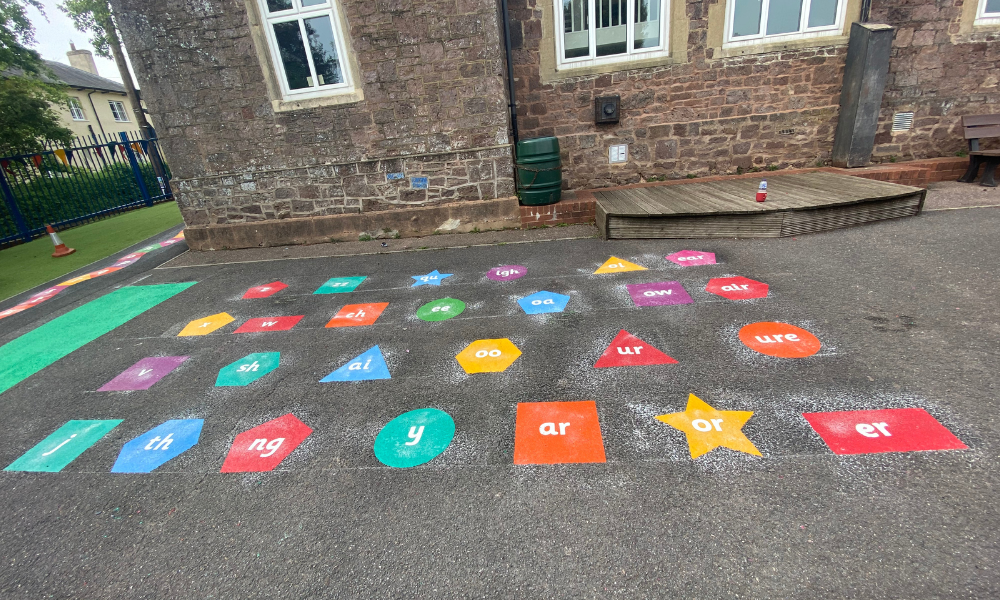
Instead of learning letters only at a table, children hop, skip or dance along an alphabet trail, reinforcing sounds through movement.
Role play roadways and mini towns
Pretend roads, zebra crossings, shops and post offices encourage real-world role play. Children take on roles as drivers, shopkeepers and pedestrians, practising turn-taking, conversation and storytelling, and they start to learn about road safety along the way.
Animal and nature themes
Footprints, insects, animals and nature trails stir curiosity about the world. They can become the basis for storytelling, scavenger hunts or themed games that support both imaginative and scientific thinking.
Numbers and patterns
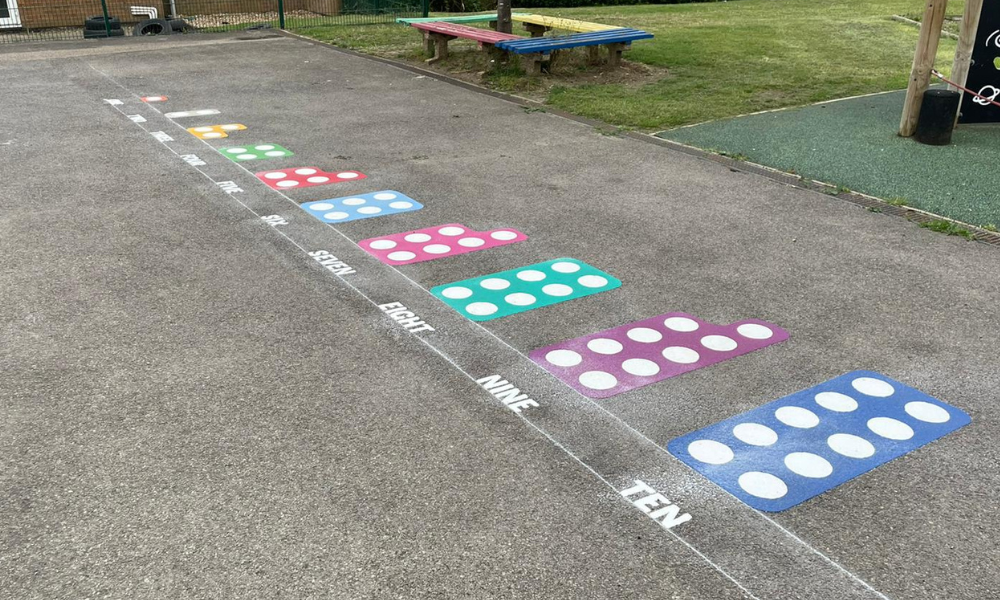
Number snakes, counting grids and shapes support early numeracy, and they also become the setting for races, challenges and imaginary worlds that children invent themselves.
Open-ended play zones
We also create zones of patterns, paths and markings that are not tied to a single game or purpose. These encourage children to invent their own rules and use their imagination freely.
How do EYFS playground markings help young children stay physically active?
EYFS playground markings help young children stay physically active by turning running, hopping, jumping, throwing and catching into games they want to repeat, which builds physical development into the daily routine rather than leaving it to set PE sessions.
Mile tracks, trails, hopscotch and target markings all give children a reason to move. Because the games are simple and non-competitive, our markings provide a level playing field for children of all abilities to join in with exercise and active play, and teachers and practitioners can use the same markings for planned physical activities.
How do we plan and install EYFS playground markings at our setting?
Planning EYFS playground markings starts with a no-obligation site visit from our team to assess your playground and any existing markings, followed by a design that includes the markings and ideas your staff and children have asked for.
- Bespoke design: our in-house graphics team works with teachers, practitioners and carers, listening to your requirements before creating designs your children can enjoy for years to come.
- Safe for young children: our thermoplastic playground markings are non-toxic and slip resistant, and they are durable, with a manufacturer's warranty of up to 4 years, subject to ground condition. We have seen markings last over 10 years.
- Minimal disruption: our DBS-checked installation team works efficiently, and the markings are ready to use within 30 minutes of installation.
- Old markings removed: if you have old or worn markings, we have specialist removal equipment and can clear them before the new designs go down.
To talk about EYFS playground markings for your nursery, pre-school or reception class, call our team on 0333 321 6699 email [email protected] or contact us online and a member of our team will be in touch as soon as possible.
Ready to transform your playground?
A free design and a detailed quote, with no hidden costs and our price match promise.
All prices include installation, and every quote is fully itemised.
- Free design and site survey
- No obligation
- Our own in-house installation team
More from the blog
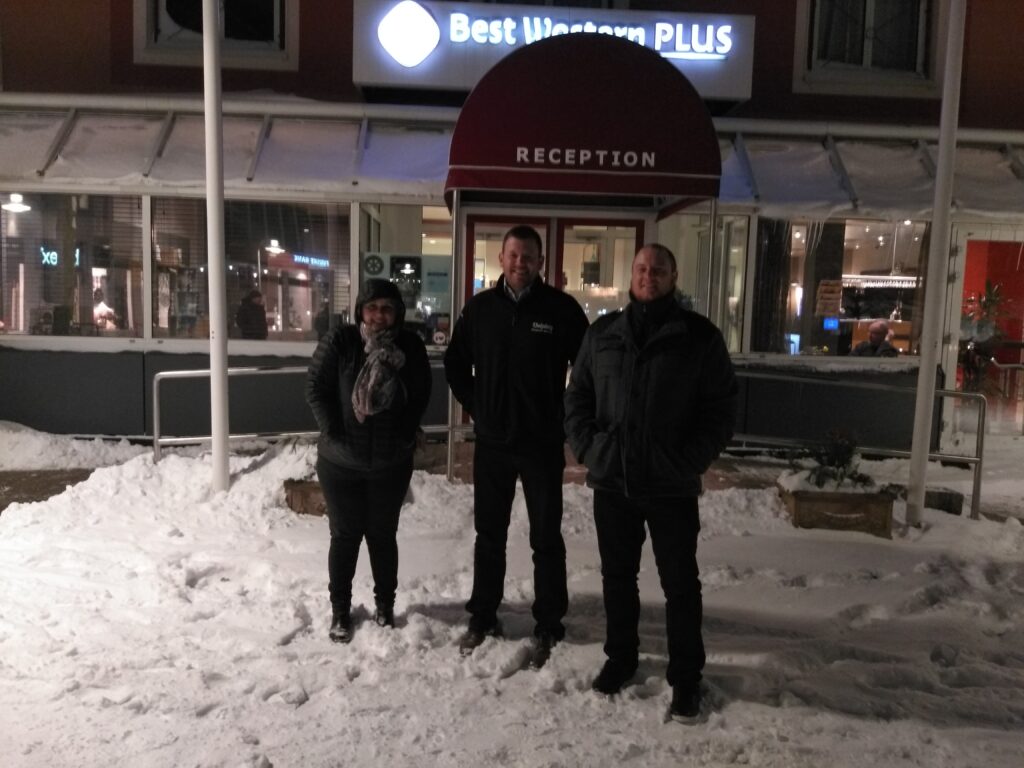
Geveko Markings, Denmark
Last month saw 3 of our team fly out of a very snowy Manchester Airport for an educational visit to Geveko in Denmark.
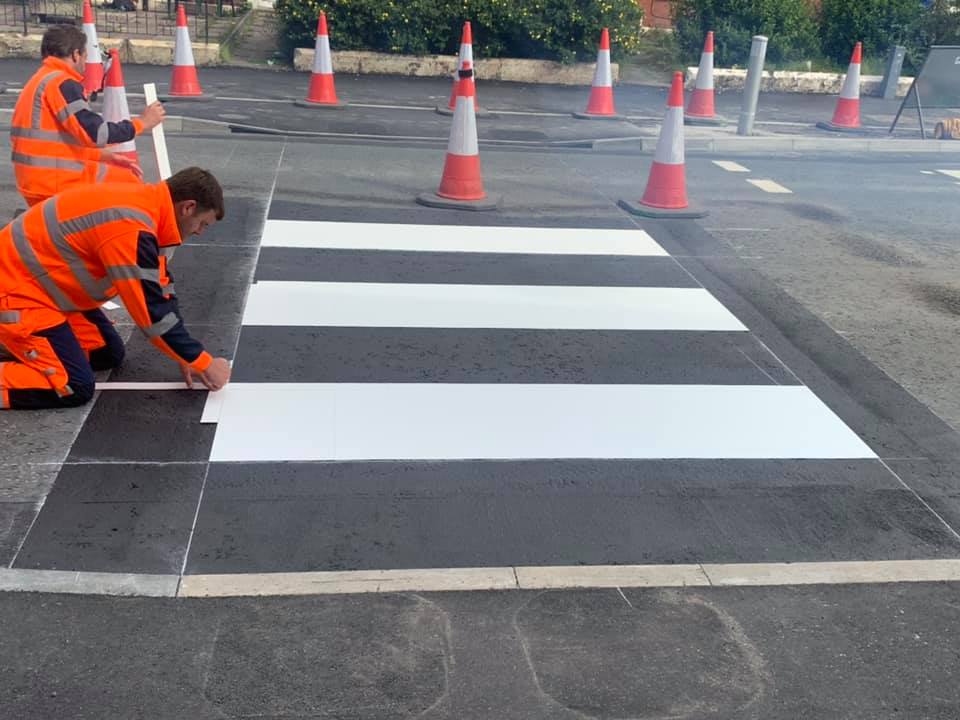
Highway Thermoplastic Markings vs. Line Paint
One of the most common questions we are asked by our clients are the benefits of using thermoplastic highway markings over traditional line painting. As
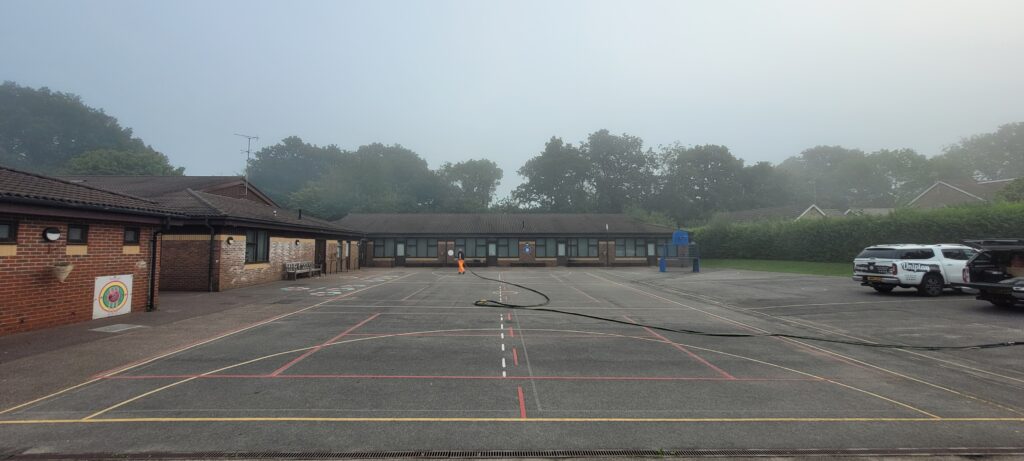
How Can Playground Line Markings Transform School Play Areas?
Playground line markings are an essential feature of school and nursery outdoor spaces, providing structure and inspiration for play, learning, and physical